"The tax code is a monstrosity and there's only one thing
to do with it. Scrap it ... and hope it never rises again to terrorize the American people."
— Steve Forbes, editor-in-chief of
Forbes magazine
FAIRTAX FAQ'S FROM A-Z
Click on the questions below to view the answers for a particular subject area:
- What is taxed?
- Exactly what taxes are abolished?
- How does the rebate work? (includeds HHS rebate table)
- Why not just exempt food and medicine from the tax? Wouldn't that be fair and simple?
- Is the 23% FairTax higher or lower when compared to the income taxes people pay today?
- Does the FairTax rate need to be much higher to be revenue neutral?
- How is the Social Security system affected under the FairTax?
- How does the FairTax affect Social Security reform?
- Is consumption a reliable source of revenue? (includes income/consumption graph)
- How is the tax collected?
- Why is the FairTax better than our current system?
- Is the FairTax fair?
- How does the FairTax protect low-income families, individuals and retirees on fixed incomes?
- Is it fair for rich people to get the exact same FairTax rebate from the federal government as the poorest person in America?
- What about senior citizens and retired people?
- Are seniors taxed twice on savings, once when they saved it, now again when they spend it?
- How much do prices for goods and services go down under the FairTax?
- Should the government tax medicine and health care?
- Should the government tax services?
- How does the FairTax affect income tax preparers, accountants, and many government employees?
- What about the home mortgage deduction?
- What will happen to charitable giving?
- Will corporations get a windfall with the abolition of the corporate tax?
- Does the FairTax burden the retail industry?
- How are state tax systems affected, and can states adequately collect a federal sales tax?
- How will the plan affect economic growth?
- What economic changes come at the retail level with the FairTax?
- What happens to interest rates?
- What happens to the stock market, mutual funds, and retirement funds?
- What happens to tax-free bonds?
- How does this affect U.S. competitiveness in foreign trade?
- What about border issues?
- Does the FairTax improve compliance and reduce evasion compared to the current income tax?
- Can the FairTax really be passed into law?
- What other significant economies use such a tax plan?
- What about the flat tax? Would it be better and easier to pass?
- Can Congress just simply raise the rate once the FairTax is passed into law?
- Could we end up with both the FairTax and an income tax?
- Is the FairTax just another conservative tax scheme? Or just another liberal tax scheme?
- What assumptions have been made about government spending?
- How does the FairTax affect government spending?
- Why is it necessary to have a constitutional amendment?
- How does the income tax affect our economy?
- How will this plan affect compliance costs?
- What about value-added taxes (VATs), like they have in Europe and Canada? Are they not consumption taxes?
- What will we experience in the transition from the income tax to the FairTax?
- I
know the FairTax rate is 23 percent when compared to current income
taxes. What will the rate of the sales tax be at the retail counter?
- Is the FairTax progressive? Do the rich pay more and the poor pay less as a percentage of their spending?
- Can you summarize House Bill H.R. 25/S. 122 - "The Fair Tax Act"?
- Who are the Americans for Fair Taxation (AFFT)- FairTax.org?
If you don't find the answers to your questions in our FAQ's, check the menu under
Research or
Facts.
Need the entire FAQ in a printer friendly format? It's available
right here in PDF format.
Still can't find the answer to your FairTax question? Please consult the
Pennsylvania Volunteer Directory
to contact a FairTax community coordinator near you or call 724-941-9443 for more assistance.

The FairTax Act
Frequently Asked Questions From A-Z
-
What is taxed?
The FairTax is applied to the sale of all new consumer goods and services at the
final point of consumption. Used items are not taxed. Business-to-business purchases for the
production of goods and services are not taxed.
» back to FAQ index
-
Exactly what taxes are abolished?
The FairTax is a total replacement, not a reform of the current federal
tax code. It replaces all federal income taxes including, personal, estate, gift, capital gains,
alternative minimum, Social Security (FICA), Medicare, self-employment, and corporate taxes.
» back to FAQ index
-
How does the rebate work?
All valid Social Security cardholders who are U.S. residents will be eligible for
a monthly rebate equivalent to the FairTax paid on essential goods and services, also known as the
poverty level expenditures. The universal rebate, paid in advance to all households, is paid in
equal installments each month, without regard to age or income of household dependents. The size
of the rebate is determined solely by the number of dependents within the household, and by the
Department of Health and Human Services’ poverty level multiplied by the tax rate. This is a
well-accepted, long-used, poverty-level calculation that includes food, clothing, shelter,
transportation, medical care. See Figure 1 below.
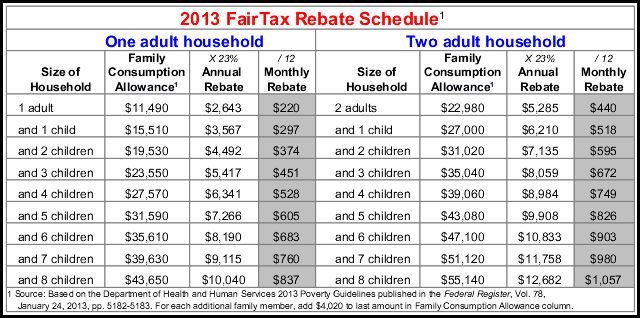
Figure 1: 2011 Family Consumption Allowance and Rebate
» back to FAQ index
-
Why not just exempt food and medicine from the tax? Wouldn’t that be fair and simple?
Exempting items by
category is neither fair nor simple. Respected economists have shown
that the wealthy spend much more on unprepared food, clothing, housing,
and medical care than do the poor. Exempting these goods, as many state
sales taxes do, actually gives the wealthy a disproportionate benefit.
Also, today these purchases are not exempted from
federal taxation. The purchase of food, clothing, and medical services
is made from after income tax and after
payroll tax dollars, while their purchase price hides the cost of
corporate taxes and private sector compliance costs.
Finally, exempting one product or service, but not another, opens the
door to the army of lobbyists and special interest groups that plague
and distort our taxation system today. Those who have the money will
send their lobbyists to Washington to obtain special tax breaks in
their own self-interest. This process causes unfair and inefficient
distortions in our economy and must be stopped.
» back to FAQ index
-
Is the 23% inclusive FairTax rate
higher or lower when compared to the income taxes people pay today?
Most people are paying that much or more today – much
of it is just hidden from view. The income tax bracket most people fall
into is 15% and all wage earners pay 7.65% in payroll taxes. That’s a
total of 23.65% right there, without taking into account the 7.65%
employer matching! On top of that, you have to add in all of the taxes
embedded in the goods you buy (another 20% to 30%).
EFFECTIVE TAX RATES VS. STATED TAX RATES
Because the 23% inclusive FairTax (30% sales tax at the register) would not
be imposed on necessities (rebate), an individual spending $28,000 on
taxable items would pay an effective tax rate of only 14.05%, not
23% (stated tax rate). This effective tax rate would be even lower when
adjusted for spending on nontaxed items.
That same individual will pay 17.3% of his or her income for federal
taxes under the current income tax law regardless of his or her spending
choices. Also, the employer would pay an additional 7.65% in FICA matching
taxes for that person.
» Calculate
your FairTax effective tax rate based on your income/spending
» back to FAQ index
-
Does the FairTax rate need to be much
higher to be revenue neutral?
The proper tax rate has
been carefully worked out; 23 percent does the job of: (1) raising the
same amount of federal funds as is raised by the current system, (2)
paying the universal rebate, and (3) paying the collection fees to
retailers and state governments. Unlike some other proposals, this rate
has been independently confirmed by several different, non-partisan
institutions across the country. Detailed calculations are available
from FairTax.org.
» back to FAQ
index
-
How is the Social Security system
affected under the FairTax?
Like all federal spending
programs, Social Security operates exactly as it does today, except
that its funds come from a broad, progressive sales tax, rather than a
narrow, regressive payroll tax. Employers will report wages for each
employee to the Social Security Administration for the determination
of benefits. The transition to a reformed Social Security system will
be eased while ensuring there is sufficient funding to continue promised
benefits.
» back to FAQ
index
-
How does the FairTax affect Social Security reform?
FairTax.org is a
one-issue organization: income tax replacement. However, its proposal does
benefit any Social Security reform proposal. The
FairTax.org plan does not change Social Security benefits or the
structure of the Social Security system. All it does is replace the
current revenue source (narrow, regressive payroll taxes) with a new
revenue source (a broad, progressive sales tax paid by all consumers
including U.S. citizens, illegal immigrants and foreigh visitors).
Additionally, research shows that consumption is a more stable revenue
source than income. If Social Security is reformed or privatized in a
way that reduces the government’s need for revenue, then the FairTax
rate can be reduced. For example, if a mandatory private savings
program is implemented where people must save 10 percent of their
income and Social Security benefits are curtailed, then the FairTax
rate can be reduced just as payroll taxes would be reduced.
» back to FAQ
index
-
Is consumption a reliable source of revenue?
Yes, in fact, consumption
is a more stable source of revenue than income. A recent study by
American Farm Bureau economist Ross Korves shows the FairTax base was
less variable than the income tax base. Why? Because during difficult
times due to loss of a job or an inability to work, people may not have
as much income, or may have no income at all. They borrow funds or use
savings. They may not have earnings, but they still continue to
consume. Korves’s Figure 2 below shows the yearly changes in the tax
base, adjusted gross income (AGI), under the current tax system for
1971-2001 and changes in personal consumption expenditures (PCE) of the
same time period.
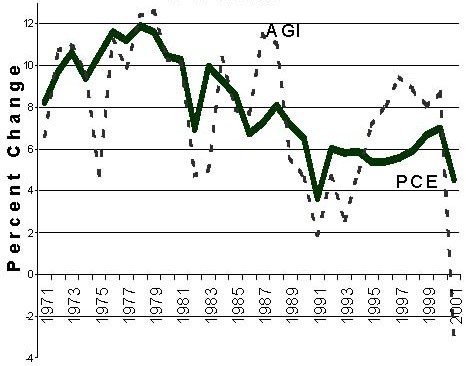
Figure 2: Stability of the Tax Base - 1971 to 2001
» back to FAQ index
-
How is the tax collected?
Retail businesses collect
the tax from the consumer, just as state sales tax systems already do
in 45 states; the FairTax will simply be an additional line on the
current sales tax reporting form. Retailers simply collect the tax and
send it to the state taxing authority. All businesses serving as
collection agents will receive a fee for collection, and the states
will also receive a collection fee. The tax revenues from the states
will then be sent to the U.S. Treasury.
» back to FAQ
index
-
Why is the FairTax better than our current system?
Our present tax system is
one of the reasons that people are finding it so difficult to get ahead
these days. It is one of the reasons the next generation may not have a
standard of living as high as this generation. Cars replaced the horse
and buggy, the telephone replaced the telegraph, and the FairTax
replaces the income tax. The income tax is holding us back and making
it more difficult than it needs to be to improve our families’ standard
of living. It makes it needlessly difficult for our businesses to
compete in international markets. It wastes vast resources on complying
with needless paperwork. We can do better and we must.
» back to FAQ index
-
Is the FairTax fair?
Yes, the FairTax is fair,
and in fact, much fairer than the income tax. Wealthy people spend more
money than other individuals. They buy expensive cars, big houses, and
yachts. They buy filet mignon instead of hamburger, fine wine instead
of beer, designer dresses and expensive jewelry. The FairTax taxes them
on these purchases. If, however, they use their money to build
job-creating factories, finance research and development to create new
products, or fund charitable activities (all of which help improve the
standard of living of others), then those activities are not taxed.
» back to FAQ index
-
How does the FairTax protect low-income families and
individuals and retirees on fixed incomes?
Under the FairTax plan,
poor people pay no federal taxes at all up to the poverty level! Every
household receives a rebate that is equal to the FairTax paid on
essential goods and services, and wage earners are no longer subject to
the most regressive and burdensome tax of all, the payroll tax. Those
spending at twice the poverty level will pay a tax of only 11.5 percent
– a rate much lower than the income and payroll tax burden they bear
today. Moreover, slow economic growth and recessions have a
disproportionately adverse impact on lower income families.
Breadwinners in these families are more likely to lose their jobs, are
less likely to have the resources to weather bad economic times, and
are more in need of the initial employment opportunities that a
dynamic, growing economy provides. The FairTax dramatically improves
economic growth and wage rates. Retaining the present tax system makes
economic progress needlessly slow, thus harming low-income people the
most.
» back to FAQ index
-
Is it fair for rich people to get the exact same FairTax rebate
from the federal government as the poorest person in America?
Let’s look at a
billionaire under the FairTax – if he spends $10,000,000 dollars he
pays a tax of $2,300,000 and gets a rebate of $4,283 (assuming he is
married and has no children). His effective tax rate is 22.96 percent.
Now, let’s look at a middle-income married couple, under the FairTax,
with no children – if they spend $40,000, they pay
$4,917 net after their rebate for an effective tax rate of 12.3
percent. The effective tax rate increases or decreases as spending on
taxable items increases or decreases, but it can never
exceed a 23 percent inclusive rate!
| DESCRIPTION |
FAIR TAX |
INCOME TAX |
| Expenditures=Income |
$40,000 |
$40,000 |
| Net Tax |
$4,917 |
$6,005 |
| Effective tax rate |
12.3% |
15.0% |
Figure 3: Comparison of Effective Tax Rates
FairTax vs Income Tax
In contrast, this same
couple, if they earn $40,000 in wages today under
the income tax, pays $3,060 in payroll taxes and $2,945 in income taxes
for a total of $6,005 in taxes (15.0 percent). In addition, their
employer pays another $3,060 in payroll taxes. Most economists agree
that the employer payroll tax is actually borne by employees in the
form of lower wages. Looked at this way, this couple is paying $9,065
(22.6 percent) in taxes today, which doesn’t even include the hidden
taxes they pay every time they make a purchase. Therefore, a
middle-income married couple with no children has an effective FairTax
rate of 12.3 percent, compared to their effective income tax rate of
22.6 percent!
Finally, let’s look at a low-income couple under the FairTax – they
pay no federal tax at all. Today, under the income tax
system, they not only pay 15 percent in payroll taxes, but they also
pay at least 20 percent in hidden corporate taxes, private sector
compliance costs, and payroll taxes buried in the cost of every product
they buy.
» back to FAQ index
-
What about senior citizens and retired people?
As a group, seniors do
very well under the FairTax. Low-income seniors are much better off
under the FairTax than under the current income tax system. Seniors,
like everyone else, receive a monthly rebate, in advance of purchases,
for taxes paid on the cost of necessities. The income tax imposed on
Social Security benefits is repealed. The income tax imposed on
investment income and pension benefits or IRA withdrawals is repealed.
Pension funds, IRAs, and 401(k) plans had assets of $6.5 trillion in
1994. An income tax deduction was taken for contributions to most of
these plans. All beneficiaries and owners of these plans expected to
pay income tax on them upon withdrawal but will not be required to do
so after passage of the FairTax.
All owners of existing homes experience large capital gains due to the
repeal of the income tax and implementation of the FairTax plan.
Seniors have dramatically higher home ownership rates than other age
groups (81 percent for seniors compared to 65 percent on average).
Homes are often a family’s largest asset. Gains are likely to be in the
range of 20 percent.
The FairTax makes the economy much more dynamic and prosperous.
Consequently, federal tax revenues grow. This makes it less likely that
federal budget pressures require Medicare or Social Security benefit
cuts.
» back to FAQ index
-
Are Seniors taxed twice on savings, once when they saved it,
and now again when the spend it?
No. As surprising as it
may sound, prices at the cash register will not go up under the
FairTax. Simply put, the FairTax is a revenue-neutral proposal, raising
no more money than does the current system. The FairTax only changes
where the money is raised, not the amount. Therefore, the FairTax is
also price neutral.
The price of every good or service we buy today is inflated by the cost
of corporate income taxes, private sector compliance costs, and payroll
matching taxes. These costs are passed on to consumers in the form of
higher prices (or lost jobs or lower profits/dividends).
When income and payroll taxes are repealed, pre-tax prices can come
down 20 to 25 percent according to Dale Jorgenson, Ph.D., chairman of
the Harvard University Economics Department. Furthermore, used goods
are not taxed because they have already been taxed once – when they
were new. Therefore senior citizens, like all Americans, do not lose
purchasing power, but gain it instead. Government benefits are
maintained. Seniors receive a monthly rebate so they don’t pay taxes on
the purchase of necessities. Tax-deferred investments get a one-time
windfall. Savings invested in any long-term, income-generating asset
such as a stock, real estate, or a long-term bond that can’t be called,
will increase substantially in value. Finally, complex estate planning
becomes an artifact of an earlier age.
» back to FAQ index
-
How much do prices for goods and services go down
under the FairTax?
All goods and services
already contain the embedded costs of the current tax system in their
prices. When these embedded taxes are removed, prices come down. Dale
Jorgenson, Ph.D., chairman of the Economics Department at Harvard
University, has projected an average producer price reduction of 20
percent in just the first year after the adoption of the FairTax. In
addition, the FairTax lowers compliance costs by an estimated 95
percent and the removal of these costs will force prices down even
lower.
» back to FAQ index
-
Should the government tax medicine and health care?
Because federal income
and payroll taxes are embedded in the price of everything you buy, you
are already paying federal taxes on the drugs and
other health care services that you buy today – they are just hidden.
After passage of the FairTax, prices (even including the FairTax) may
not go up at all. Harvard economist Dale Jorgenson estimates that
service prices will decline by 25 percent because of the repeal of the
income tax.
» back to FAQ
index
-
Should the government tax services?
Service providers are
not exempt from the income tax today, and should not be exempt from the
FairTax. Services now account for well over one-half of the gross
domestic product (GDP). Neither consumption of services nor consumption
of goods should be tax preferred. And it is economically foolish not to
tax the fastest growing segment of our economy. Competition, not
politics, should determine what goods and services cost.
» back to FAQ
index
-
How does the FairTax affect income tax preparers,
accountants, and many government employees?
There will, of course,
still be some people who are involved in sales tax return preparation
and sales administration under the FairTax, but many fewer than those
involved with the income tax today. Those tax preparers, tax lawyers,
and Internal Revenue Service employees will have to find other, more
productive work. We have nothing to show for the $250 billion
(three Iraq wars worth) that we spend each year measuring, tracking,
sheltering, documenting, and filing our annual income. Surely
these valuable labor and capital resources can be employed more
productively, such as following the money trails left by terrorist,
drug, and other criminal enterprises, rather than trackingevery
American wage earner.
» back to FAQ
index
-
What about the home mortgage deduction?
The FairTax has positive
effects on residential real estate far beyond this narrow question.
Under the current tax system, homeowners that itemize (and 70% do not),
pay their mortgage interest with post-Social Security/pre-income tax
dollars. However, they pay their mortgage principal with
post-SS/post-income tax dollars. In other words, anyone paying a
mortgage today is paying the entire payment with after tax dollars,
thus paying taxes on all or part of their mortgage, whether it was a
new house or an old one. Those who do not itemize get no advantages at
all regarding the post tax dollars spent on the interest.
Under the FairTax, all homeowners make their entire
house payment with pre-tax dollars. Sales tax will only be
charged on new homes when purchased (equal in tax cost with the current
system of post-tax dollars). All used homes under Fair Tax will not be
taxed, which is quite an advantage over the current system of post-tax
payments.
With the FairTax, mortgage interest rates fall by about 25 percent
(about 1.75 points) as bank overhead falls; this is a huge savings for
consumers. For example, on a $150,000, thirty-year home mortgage at an
interest rate of 7.00 percent, the monthly mortgage payment would be
$999.12. On that same mortgage at a 5.25 percent interest rate, the
monthly payment would be $830.01. Over 30 years, the 1.75-percent
decrease in interest rates in this instance would result in a $60,879
cost savings to the consumer.
Finally, first-time buyers save for that down payment much faster, as
savings are not taxed. Under the FairTax, home ownership is a
possibility for many who have never had that option under the income
tax system. Lower interest rates, the repeal of the income tax, the
repeal of all payroll taxes, and the rebate mean
that people have more money to spend, and have an increased opportunity
to become home owners.
» back to FAQ index
-
What will happen to charitable giving?
Charitable
contributions depend on one factor more than any other: The health of
the economy not tax benefits. As a wide range of
economists agree on the economic expansion the FairTax delivers,
charitable contributions benefit also.
For all of the money that pours into churches every Sunday and into a
broad range of charities every day, only the 30 percent who itemize get
any tax benefit. The other 70 percent have given and keep giving with
no tax benefit whatsoever.
The FairTax allows people to make charitable contributions out of pre-tax
dollars. Thus those generally less affluent taxpayers who do
not itemize see their cost of charitable giving go down under the
FairTax.
Finally, the wealthy make decisions on charitable giving based on the
cause. Once they have determined the cause is worthy, their
contribution is structured to maximize the gift and minimize the tax.
But the intention to give comes first; taxes simply determine the
structure – rarely the amount – of the gift.
» back to FAQ index
-
Will corporations get a windfall with the abolition of
the corporate tax?
Corporations are legal
fictions that have not, do not, and never will bear the burden of
taxation. Only people pay taxes. Corporations pass on their tax burden
in the form of higher prices to consumers, lower wages to workers,
and/or lower returns to investors. The idea that taxing a corporation
reduces taxes on, say the working poor, is a cruel hoax. A corporate
tax only makes what the working poor buy more expensive, costs them
jobs, lowers their lifestyle, or delays their retirement. Under the
FairTax plan, money retained in the business and reinvested to create
jobs, build factories, or develop new technologies, pays no tax. This
is the most honest, fair, productive tax system
possible. Free market competition will do the rest.
» back to FAQ index
-
Does the FairTax burden the retail industry?
All businesses are tax
collectors today. They withhold income and payroll taxes from their
employees. Moreover, the vast majority of retail businesses operate in
states with a sales tax (45 states currently use a sales tax) and are
already sales tax collectors. Under the FairTax, retailers are paid a
fee equal to ¼ of one percent of federal sales tax they collect and
remit. In addition, of course, retailers no longer bear the cost of
complying with the income tax, including the uniform capitalization
requirements, the various depreciation schemes, and the various
employee benefit and pension rules. Finally, the aggregate, beneficial
effects of dramatically lower income tax compliance costs, no income
taxes, and a reasonable fee for collecting the FairTax, ensure that
retailers will do quite well.
» back to FAQ index
-
How are state tax systems affected, and can states
adequately collect a federal sales tax?
No state is required to
repeal its income tax or piggyback its sales tax on the federal tax.
All states have the opportunity to collect the FairTax; states will
find it beneficial to conform their sales tax to the federal tax. Most
states will probably choose to conform. It makes the administrative
costs of businesses in that state much lower. The state is paid a ¼ of
one percent fee by the federal government to collect the tax. For
states that already collect a sales tax, this fee proves generous. A
state can choose not to collect the federal sales tax, and either
outsource the collection to another state, or opt to have the federal
government collect it directly. If a state chooses to conform to the
federal tax base, they will raise the same amount of state sales tax
with a lower tax rate – in some cases more than 50 percent lower –
since the FairTax base is broader than their current tax base. States
may also consider the reduction or elimination of property taxes by
keeping their sales tax rate at or near where it is currently. Finally,
conforming states that are part of the FairTax system will find
collection of sales tax on Internet and mail-order retail sales greatly
simplified.
» back to FAQ index
-
How will the plan affect economic growth?
With the penalty for
working harder and producing more removed, Americans are free to keep
every dollar they earn, and a new era of economic growth and job
creation is unleashed. Americans are able to save more, and businesses
will invest more. Capital formation, the real source of job creation
and innovation, is facilitated. Gross domestic product (GDP) increases
by an estimated 10.5 percent in the first year alone. The FairTax as
proposed raises the economy’s capital stock by 42 percent, its labor
supply by four percent, its output by 12 percent, and its real wage
rate by eight percent.
As U.S. companies and individuals repatriate, on a tax-free basis,
income generated overseas, huge amounts of new capital flood into the
United States. With such a huge capital supply, real interest rates
remain low. Additionally, other international investors will seek to
invest here to avoid taxes on income in their own countries, thereby
further spurring the growth of our own economy.
» back to FAQ index
-
What economic changes come at the retail level with
the FairTax?
Our baby boom generation
has been trained to spend money before inflation eats it up or savings
is taxed away. This group, for good or evil, will likely spend their
initial pay raise. Others will recognize the advantages of savings and
investment. There will be a whole new round of home refinancings. There
will likely be a lot of interest in the actual cost of the federal
government when consumers see their most recent contribution at the
bottom of each retail receipt.
Since the FairTax plan is revenue neutral, the same
amount of resources is extracted from the economy as is extracted under
current law. These funds are, however, extracted in a less economically
damaging way. Every known economic projection shows the economy doing
better, often much better, under the FairTax.
Because the economy grows, is more efficient, and more productive,
while investment, wages and consumption are higher than they are under
the income tax.
» back to FAQ index
-
What happens to interest rates?
First, interest rates
drop quickly by approximately one-quarter. Interest rates include
compensation to the lender for the tax that they must pay on interest
you pay them. That is why taxable bonds bear a higher interest rate
than tax-exempt bonds. When the tax on interest is removed, interest
rates will drop toward today’s tax-exempt rate.
Second, under the current system, savings and investments are taxed.
Under the FairTax, savings and investments are not be taxed at all. As
Americans save more money, the pool of funds in lending institutions
grows. When you add to this the flood of capital currently trapped
offshore, we realize a huge increase in the pool of capital, thereby
causing the cost of borrowing funds to drop.
» back to FAQ index
-
What happens to the stock market, mutual funds, and
retirement funds?
Investors prosper
greatly under this plan, since corporations face lower operating costs
and individuals have more money to save and invest. The reform
significantly enhances the retirement savings and/or retirement
spending power of most Americans.
» back to FAQ index
-
What happens to tax-free bonds?
Tax-free bonds are still
tax-free, though they are now directly competitive with corporate
bonds. Under the FairTax equities, treasuries, bonds, and other
investments are all tax-free. There is a one-time windfall in
non-callable instruments, such as corporate bonds; this windfall also
has a positive effect on callable instruments with some time remaining
to the call date, including treasuries.
» back to FAQ index
-
How does this affect U.S. competitiveness in foreign
trade?
Since all U.S. exporters
immediately see an average 20-percent reduction in their production
costs, they experience an immediate boost in their competitiveness
overseas. American companies doing business internationally are able to
sell their goods at lower prices but similar margins, and this brings
jobs to America.
In addition, U.S. companies with investments or plants abroad will
bring home overseas profits without the penalty of paying income taxes,
thus resulting in more U.S. capital investment.
And at last, imports and domestic production are on a level playing
field. Exported goods are not subject to the
FairTax, since they are not consumed in the U.S.; but imported goods
sold in the U.S. are subject to the FairTax because
these products are consumed domestically.
» back to FAQ index
-
What about border issues?
It is unlikely that
“shopping across the border” in Canada or Mexico will result in any
cost savings to the consumer. Remember, the FairTax is revenue neutral
and therefore price neutral. This means the final cost of retail goods
and services after the FairTax remains very close to the same levels
found in the marketplace today. With regard to interstate competition,
since all states have the same federal sales tax rate, the federal
sales tax is not an incentive to cross state lines to avoid the tax.
» back to FAQ index
-
Does the FairTax improve compliance and reduce evasion
when compared to the current income tax?
The old aphorism that
nothing is certain except death and taxes should be modified to include
tax evasion. Tax evasion is chronic under any system so complex as to
be incomprehensible. As a percentage of gross domestic product (GDP),
tax evasion is beyond 2.0 percent, compared to 1.6 percent in 1991. Tax
evasion continues to be in the range of one quarter of income taxes
collected. Almost 40 percent of the public, according to the IRS, is
out of compliance with the present tax system, mostly unintentionally
due to the enormous complexity of the present system. These IRS figures
do not include taxes lost on
illegal sources of income with a criminal economy estimated at a trillion
dollars. All this, despite a major enforcement effort and
assessment of tens of millions of civil penalties on American taxpayers
in an effort to force compliance with the tax system. Disrespect for
the tax system and the law has reached dangerous levels and makes a
system based on taxpayer self-assessment less and less viable.
The FairTax reduces rather than increases the problem of tax evasion.
The increased fairness, transparency, and legitimacy of the system will
induce more compliance. The roughly 90-percent reduction in filers
enables tax administrators more narrowly and effectively to address
non-compliance and increases the likelihood of tax evasion discovery.
The relative simplicity of the FairTax promotes compliance. Businesses
need answer only one question to determine the tax due: How
much was sold to consumers?
Finally, because tax rates decrease, tax evasion is less profitable;
and because of the dramatic reduction in the number of tax filers, tax
evaders are be more easily monitored and caught under the FairTax
system.
» back to FAQ index
-
Can the FairTax really be passed into law?
Do women have the right
to vote in this country? Did we pass Prohibition? Did we repeal it? Do
Blacks enjoy freedoms far beyond the lunch counter and mass transit? Do
free-market economies dominate Eastern Europe, peoples once under the
boot of communism? All these were grassroots efforts that effected
significant changes in our nation and the world. Is the current income
tax system any less a yoke around the necks of otherwise free peoples?
We think not.
Passing the original 16th Amendment and the income tax wasn’t easy and
repealing the income tax and the 16th Amendment won’t be easy either.
That is why the FairTax has undertaken to build a grassroots movement
and grassroots alliances to support the effort. When enough people make
it clear to Washington that they want change, it will happen. But it
will only happen if the American people rally behind the effort, throw
off the yoke, and demand a redress of wrongs.
» back to FAQ index
-
What other significant economies use such a tax plan?
Two of the largest
economies in the world rely almost solely on sales taxes: Florida and
Texas. Many civilizations in history have relied solely on
transaction-based consumption taxes: A percentage of a grain shipment
in exchange for a safe harbor. Even a cursory study of history shows
that nation/states that relied on consumption taxes flourished and
prospered, supported democracies/republics, had expanding economies,
and high levels of civil rights for their citizens. The exact opposite
is true for empires that relied on income/poll/head taxes. These taxes
were used to support despots, eventually collapsed the economies in
which they were applied, and sundered civil rights.
The sales tax is a familiar tax, being a major source of revenue in 45
states and the District of Columbia. It is true, however, that no
post-industrial nation, until now, has ever repealed
its income tax and replaced it with a federal
retail sales tax. However, England did repeal its detested income tax
upon the defeat of Napoleon and enjoyed the fastest, longest expansion
of its economy in its long history. An expansion that ended only with
the – you guessed it – re-imposition of an income tax.
No other country has a system of government like ours, and no other
country has led the world in so many fields as ours. It was France and
Germany that forced the imposition of a VAT in addition
to income taxes across the European Community. Shall we follow France’s
lead? In contrast, we can observe the Irish Miracle that stems from
their refusal to join the EC and their choice to follow their own path
on taxation. Thus, we should simply strive to have the best tax system,
period.
» back to FAQ index
-
What about the flat tax? Would it be better and easier
to pass?
The flat tax and the
FairTax share some important similarities. They are both flat-rate
taxes that are neutral with respect to savings and investment. The flat
tax, however, retains the invasive income tax administration apparatus
and can easily revert to a graduated, convoluted mess, as it has many
times over many years.
Very few people really understand the flat tax. Its authors will tell
you it is a consumption tax that uses the income tax system for
implementation. Only an academic or government bureaucrat would dream
up a consumption tax that needs the invasive income tax apparatus for
its application, when one can simply have a retail sales tax and reduce
the bureaucracy by 90 percent or more! In addition, a large part of the
burden of the flat tax – the business tax – will remain hidden from
people in the retail price of goods and services.
In contrast, the FairTax is simple, easy to understand, and visible. It
cannot be converted into an income tax.
Under a flat tax, individuals would still file an income tax return
each year similar to today’s 1040 EZ. While this is a simple postcard,
the record keeping required to fill in the blanks is still long and
burdensome. Under the FairTax, individuals would never file a tax
return again, ever! Under the flat tax, the payroll tax would be
retained and income tax withholding would still be with us. Under the
FairTax, the payroll tax, which is a larger and more regressive tax
burden for most Americans than is the income tax, would be repealed.
Under the FairTax, what you earn is what you keep. No more with-holding
taxes; no more income tax.
Notwithstanding flat tax proponents’ honorable intentions, income tax
reform has been less than a success in the past. Congress has tried to
reform the income tax again and again, with the result being greater
complexity and, generally, higher rates. The problem is
the income tax, and it is time to stop tinkering with it.
Flat tax supporters have made major political attempts to pass their
reform, including the efforts of former Majority Leader Dick Armey and
presidential candidate Steve Forbes, and yet, their efforts have not
progressed politically for several years. With every debate, the flat
tax loses grassroots and congressional support to the FairTax. It is
time to junk the entire income tax system and start over with a tax
system that is more appropriate for a free society and better able to
meet the needs of the information age.
» back to FAQ index
-
Can Congress just simply raise the rate once the
FairTax is passed into law?
Yes, of course Congress
can raise the FairTax rate just as it could raise the flat tax rate or
can and does raise the income tax rate. And if we in the grassroots
allow them to do it, shame on us!
However, the FairTax is highly visible. And because there is only one
tax rate, it will be very hard for Congress to adopt the typical
divide-and-conquer, hide-and-disguise, strategy employed today to
ratchet up the burden gradually, by manipulating the income tax code.
Ultimately, the tax rate will be dictated by the size of government. If
government gets larger, higher tax rates will be required. If
government shrinks relative to the economy, then the tax rate will
fall. Federalist 21, by Alexander Hamilton, is a
great read on the futility of government raising a consumption tax too
high, and thus reducing revenues.
» back to FAQ index
-
Could we end up with both the FairTax and an income
tax?
No current supporter of
the FairTax would support the FairTax unless the entire income tax is
repealed. Moreover, concurrent with the repeal of the income tax, a
constitutional amendment repealing the 16th Amendment and prohibiting
an income tax will be pushed through Congress for ratification by the
states.
» back to FAQ index
-
Is the FairTax just another conservative tax scheme?
Or just another liberal tax scheme?
The FairTax has
non-partisan support from people in all walks of life. From both major
parties and several third parties. Its supporters need only have one
common belief: That it is a fairer, simpler, more efficient way to
raise federal revenue. The FairTax delivers these benefits to all
American people and more. More government accountability for taxpayer
dollars, a tax system that is less susceptible to being manipulated by
special interests, a tax system that will make it easier – not harder –
for the average person to get ahead, and perhaps most importantly, a
tax system that provides real, honest, and transparent tax relief for
those who need it most.
» back to FAQ index
-
What assumptions have been made about government spending?
The FairTax plan is
devised to be revenue neutral for the first year of operation. It
raises the same amount of revenue as is raised by current law. After
the first year, revenue is expected to rise because of the growth
generated by this plan. At that time the American people, the Congress,
and the President will have to decide whether to lower the tax rate, or
to spend the additional revenue.
» back to FAQ index
-
How does the FairTax affect government spending?
The public must remain
vigilant to ensure that the economic gains caused by the FairTax
benefit the people and the causes they deem worthy. However, it is
easier to determine if your elected representatives are acting in your
best interest. Legislators can more easily be held accountable for
their decisions. For the first time in decades, it is simple to see
whether a politician is advocating an increase in taxes or a restraint
on government spending as the economic pie gets bigger. This is not the
case today.
» back to FAQ index
-
Why is it necessary to have a constitutional amendment?
It is not the intention
of this plan, or the desire of the American people, to end up with both
a federal income tax and a federal sales tax. The objective is to
ensure that one is replaced by the other, not added on top of the
other. By repealing the 16th Amendment, we close the door on an income
tax for generations to come.
» back to FAQ index
-
How does the income tax affect our economy?
How does dragging an
anchor affect the speed of a ship? Our entire economy is not
dependent on the income tax. Instead our economy is held back by the
income tax. There was no income tax for the first 124 years of our
history – that’s more than half the time we have existed as a nation.
Under the FairTax, within ten years, average Americans will be at least
10 percent and probably 15 percent better off than they would be under
the current system. That translates to an increase of $3,000 to $4,500
per household.
» back to FAQ index
-
How will this plan affect compliance costs?
It is estimated that
Americans spend at least $250 billion a year to comply with the tax
code – that’s $850 for every man, woman, and child in America. That is
the cost of three Iraq wars. Billions of dollars in compliance costs
are wasted each year, and we have nothing of value to show for this
expenditure – not one single productive service or product is added to
our nation’s wealth. It is estimated that the FairTax dramatically cuts
such compliance costs, perhaps as much as 95 percent.
» back to FAQ index
-
What about value-added taxes (VATs), like they have in
Europe and Canada? Are they not consumption taxes?
While VATs are also
consumption taxes, and better than income taxes, the FairTax is not a
VAT. A VAT works very differently. It taxes every stage of production.
It is much more complex, and is typically hidden from the retail
consumer. Second, in industrialized countries that have a VAT, it
coexists with high-rate income tax, payroll and many other taxes that,
in some instances, have led to marginal tax rates as high as 70
percent. Third, all other industrialized countries, except Australia
and Japan, have a much larger tax burden than the U.S., which requires
higher rates and makes tax administration much more difficult. Lastly,
a VAT is a lobbyist’s dream, allowing them to install their loopholes
unbeknownst to the retail purchaser. A retail sales tax, in contrast,
is a lobbyist’s nightmare, applied as it is under the bright lights of
the retail counter.
» back to FAQ index
-
What will we experience in the transition from the
income tax to the FairTax?
Everyone will have to
think about taxes in a different way. Income – what we earn – will no
longer have to be documented, measured and kept-track-of for tax
purposes. The only relevant measure of our tax liability will be the
amount we choose to spend on final, discretionary consumption.
Tax-related issues will suddenly be a lot simpler and more
straightforward than they used to be. The aggravation and anxiety
associated with “April 15th ” will disappear forever after passage of
the FairTax. The FairTax is not new; most Americans come into contact
with such taxes daily, since 45 states currently use them to collect
state revenues. It is easier to switch from an income tax to the
FairTax system than it is to switch from gallons to liters, or from
feet to meters! Of course, those who depend on the structure and
complexity of our current system (e.g., tax lobbyists, tax preparers,
and tax shelter promoters) will have to find more productive economic
pursuits. However, everyone will have enough advance notice to adjust
to the new system.
Job creation will boom. Residential real estate will boom. Financial
services will boom. Exports will boom. Retail will prosper. Farming and
ranching will prosper. Churches and charities will prosper. Civil
liberties will be enhanced. In short, it is difficult to imagine the
far-reaching, positive effects of this change. Though this tax policy
is exactly what our Founding Fathers counseled us to do with the Federalist
Papers and the Constitution.
» back to FAQ index
-
I know the FairTax rate is 23 percent when compared to
current income taxes. What will the rate of the sales tax be at the
retail counter?
This issue is often confusing, so we explain more here.
The rate of the sales tax at the retail counter is 30 percent.
When income tax rates are quoted, economists call that a tax-inclusive
rate: “I paid 23 percent last year.” In that case, for $100 earned, $23
went to Uncle Sam. Or, “I had to make $130 to have $100 to spend.” That’s
a 23-percent tax-inclusive rate. We choose to compare the FairTax
to income taxes, quoting the rate the same way, because the FairTax
replaces such taxes. That rate is 23 percent inclusive.
Sales taxes, on the other hand, are generally quoted tax-exclusive:
“I bought a $77 shirt and had to pay 30 percent sales tax on the $77,
amounting to that same $23 tax, for a total of $100 spent on the shirt.
This is a 30-percent sales tax.” Or, “I spent $100 dollars, $77 for the
shirt and $23 in sales tax.” This rate, when programmed into a
point-of-purchase terminal, is a 30 percent tax.
Note that no matter which way it is quoted, the amount of tax is the
same dollar amount ($23) and you maintained the same buying power
($77). Under an inclusive income tax rate of 23 percent, you have to
earn $130 to spend $100. Spend that same $100 under a sales tax, you
pay that same $30, and the rate is quoted as 30 percent. Figure 4 below
shows in chart form the differences in these two methods of quoting
tax rates. Notice the amount of tax paid is the same in both cases.
Perhaps the biggest difference between the two systems is the ability to
control your tax rate and, therefore, the amount of tax that must be paid.
Under the federal income tax system, controlling the amount of tax you pay
is a complex nightmare. However, under the FairTax, you may simply choose
to spend less, spend on used goods not taxed, invest (earnings are not taxed),
or choose to not spend at all to control your own annual tax rate.
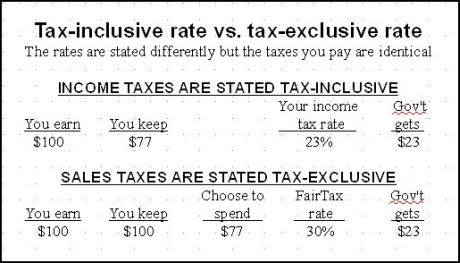
Figure 4: Tax-inclusive vs. Tax-exclusive Rates
» Alternative
explanation of 23% Inclusive and 30% Exclusive tax rate with example
» back to FAQ index
-
Is the FairTax progressive? Do the rich pay more and
the poor pay less as a percentage of their spending?
Absolutely, as you can
see in Figure 5 below – where the graph shows annual expenditures for a
family of four and the corresponding FairTax effective tax rates. The
poor can actually pay less than zero-percent retail sales tax on their
spending. Much like with the earned income tax credit of today, the
rebate may give them more money than they actually spend on retail
taxes. Especially if they are frugal and buy mostly used products. On
the other hand, the wealthy approach a maximum of 23-percent retail
sales tax on their spending.
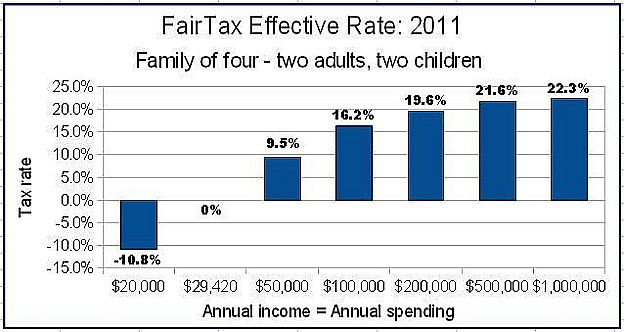
Figure 5: Annual expenditures vs. FairTax effective tax rates for a family of four
» back to FAQ index
-
Can you summarize House bill H.R. 25 - "The Fair Tax Act"?
The FairTax Act (H.R. 25 and companion legislation in the Senate, S. 122) is a
non-partisan proposal that abolishes all federal income
taxes, including personal, estate, gift, capital gains, alternative
minimum, corporate, Social Security, other payroll, and self-employment
taxes, and replaces them all with one simple, visible, federal retail
sales tax. The FairTax dramatically changes the basis for taxation by
eliminating the root of the problem: taxing income. The FairTax taxes
us only on what we choose to spend, not on what we earn. It does not
raise any more or less revenue, i.e., it is designed to be revenue neutral.
The FairTax is a fair, efficient, and intelligent solution to the
frustration and inequity of our current tax system.
» back to FAQ index
-
Who are the Americans for Fair Taxation (AFFT) - FairTax.org?
Americans for Fair
Taxation, known as AFFT or just FairTax.org is a non-profit,
non-partisan, grassroots organization dedicated to replacing the
current tax. The organization has hundreds of thousands of members and
volunteers nationwide, with over 8,000 in Pennsylvania alone. Its plan
supports sound economic research, education of citizens and community
leaders, and grassroots mobilization efforts. For more information,
visit the AFFT web site, fairtax.org, or call 1-800-FAIRTAX
nationally or 724-941-9443 in Pennsylvania.
» back to FAQ index
"All tyranny needs to gain a foothold is for
people of good conscience to remain silent."
— Thomas Jefferson, former U.S. president and
principal
author of the Declaration of Independence
Home |
Research |
FAQs |
In the News |
Legislators |
Links
Facts |
Resources |
Get Involved! |
Activities |
Song |
Contact
|